

Top-Rated In-Home Care for Alzheimer’s Patients: 2026 Guide
Rethinking Aging in Place
The goal is simple but crucial: let your loved one remain safe, comfortable, and dignified in their familiar home. Easier said than done, right? Between deciphering care levels, vetting caregivers, and managing insurance, families often feel like they’re juggling fire. But the right strategy can make the difference between chaos and stability.
Skilled Care vs. Custodial Care: Understanding the Difference
Most families assume all home care is created equal. That’s a costly misconception. The line between medical necessity and daily assistance affects care quality—and who foots the bill.
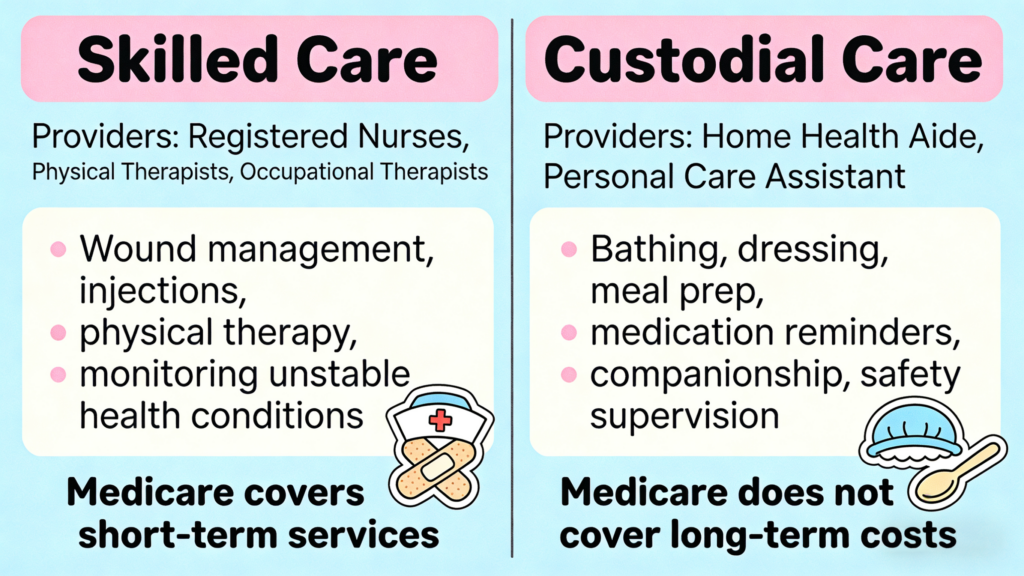
- Skilled Nursing Care (Home Health)
Skilled care is delivered by licensed professionals—Registered Nurses (RNs), Physical Therapists, or Occupational Therapists.
- Focus: Wound management, injections, physical therapy, monitoring unstable health conditions.
- Insurance: Medicare may cover short-term, intermittent skilled care if the patient is considered homeboundand a physician orders it.
- Custodial Care (Personal Care)
Custodial care handles day-to-day needs without medical intervention. This is what most Alzheimer’s patients actually require.
- Focus: Bathing, dressing, meal prep, medication reminders, companionship, and safety supervision.
- Staff: A Home Health Aide (HHA)may have some clinical training, while a Personal Care Assistant (PCA)focuses purely on non-medical support.
- Coverage: Medicare does not pay for long-term custodial care. This creates a coverage gap—families rely on private pay, LTCI, or eventually Medicaid.
The key takeaway? Misunderstanding care types can cost thousands. Know your options before hiring anyone.
Vetting Caregivers in 2026: Safety First
Technology has made background checks easier, but you can’t skip the human judgment part. Alzheimer’s patients are vulnerable; rigorous vetting isn’t optional—it’s essential.
The 2026 Vetting Checklist
- License & Certification Verification: Confirm active, unencumbered credentials via state registries.
- Dementia-Specific Training: Look for Certified Alzheimer’s Caregiver (CAC) credentials. Sundowning, aggression, and repetitive behaviors require specialized handling.
- Comprehensive Background Checks: Beyond local criminal history, check multistate social security traces and the National Sex Offender Registry.
- Drug Screening: Random, ongoing testing ensures safety.
- Behavioral Interviews: Ask about specific scenarios: refusal to bathe, repeated questioning, agitation. A skilled caregiver should have clear strategies.
Skipping even one step increases risk. Period.
Long-Term Care Insurance: Making It Work for You
If your loved one has Long-Term Care Insurance (LTCI), it can significantly offset costs—but the claims process is tricky. Precision is everything.
Navigating LTCI
- Triggering the Policy: Most policies activate when a patient needs help with two or more ADLs (bathing, dressing, toileting, transferring, continence, eating) or requires 24/7 supervision due to cognitive impairment.
- Elimination Period: Think of this as a deductible measured in days—typically 30, 60, or 90. You pay out-of-pocket during this window.
- Daily Benefit Amount (DBA): Maximum daily payout. With rising 2026 labor costs, ensure it covers local agency rates.
- Plan of Care (POC): Usually signed by a physician or Geriatric Care Manager to approve claims.
Get these steps right; otherwise, reimbursements stall, leaving families financially exposed.
Cost Estimates for Alzheimer’s Caregivers in 2026
Care costs vary widely depending on geography and specialization. Here’s a snapshot for a 40-hour week:

Live-in care: Alzheimer’s patients often need 24/7 supervision with shift coverage, pushing monthly costs over $15,000 in premium markets. Don’t underestimate the numbers.
Quality of Life: The Real Metric
The right in-home care does more than check boxes. It preserves dignity, delays institutionalization, and reduces hospital readmissions. Families also benefit—respite time is critical to avoid burnout.
What to prioritize:
- Expertise in dementia behaviors
- Reliability and safety
- Emotional intelligence and patience
A professional caregiver who blends skill and compassion changes the trajectory of Alzheimer’s care.
Strategic Steps for Families in 2026
- Evaluate Needs Early: Assess ADLs and cognitive changes before crises hit.
- Vet Agencies Rigorously: Use digital tools, certifications, and interviews.
- Plan Insurance Usage: Match LTCI daily benefits with local care costs.
- Monitor Costs: Compare hourly rates, shift patterns, and total monthly budgets.
- Consult Professionals: Geriatric Care Managers can create care plans and guide claims.
By acting proactively, families ensure a loved one’s environment is safe, nurturing, and financially sustainable.
Caring for someone with Alzheimer’s is emotionally draining—but it doesn’t have to be chaotic. 2026 offers tools, certifications, and insurance frameworks that make in-home care safer and more effective than ever. Know your options, plan meticulously, and select caregivers who treat your loved one as a person, not just a patient.
With careful planning, compassion, and professional guidance, your family can secure the highest quality of life for those navigating Alzheimer’s disease at home.