

Product Liability: Your Rights When Defective Tech Causes Harm in 2026
When Technology Turns Against Us
The law doesn’t see these as “accidents.” It sees them as preventable harm. If a defect caused your injury, you have rights. You’re entitled to compensation. The tricky part? Pinpointing exactly how and why the technology failed—and who is responsible. That’s where a product liability lawyer specializing in 2026 tech cases becomes critical.
Three Types of Product Defects in 2026
The first step in any claim is understanding the defect type. Courts classify product liability into three categories: design defect, manufacturing defect, and marketing defect (failure to warn). Each requires a different approach.
- Design Defect
A design defect exists when the product is dangerous by its very blueprint, regardless of manufacturing quality.
Example: Imagine an autonomous lawn mower that cannot distinguish a patch of grass from a small pet. Sensors exist, but engineers cut corners. The product is inherently unsafe. Every unit carries that same risk. It’s not a flaw in assembly; it’s baked into the design.
Legally, proving a design defect often hinges on showing that a safer alternative was feasible. Courts in 2026 increasingly scrutinize decisions where companies opted for cost-cutting over safety.
- Manufacturing Defect
This defect arises during production, creating a dangerous version of a product that is otherwise safe.
Example: A batch of lithium-ion batteries contaminated with microscopic metal fragments can short-circuit and ignite, even if the overall design meets safety standards. One misstep on the factory floor can turn a safe product into a hazard.
Documenting the defect is crucial. Photos, lab reports, and independent testing often make or break the case.
- Marketing Defect (Failure to Warn)
Even a flawless product becomes dangerous without adequate warnings.
Example: A wearable neuro-stimulator designed to improve focus may interfere with pacemakers. If the manufacturer knew and didn’t clearly communicate the risk, that omission is legally actionable. Sleek packaging cannot excuse negligence.
In 2026, courts treat the absence of warnings as serious. Consumer safety comes first, especially when the risk is foreseeable.
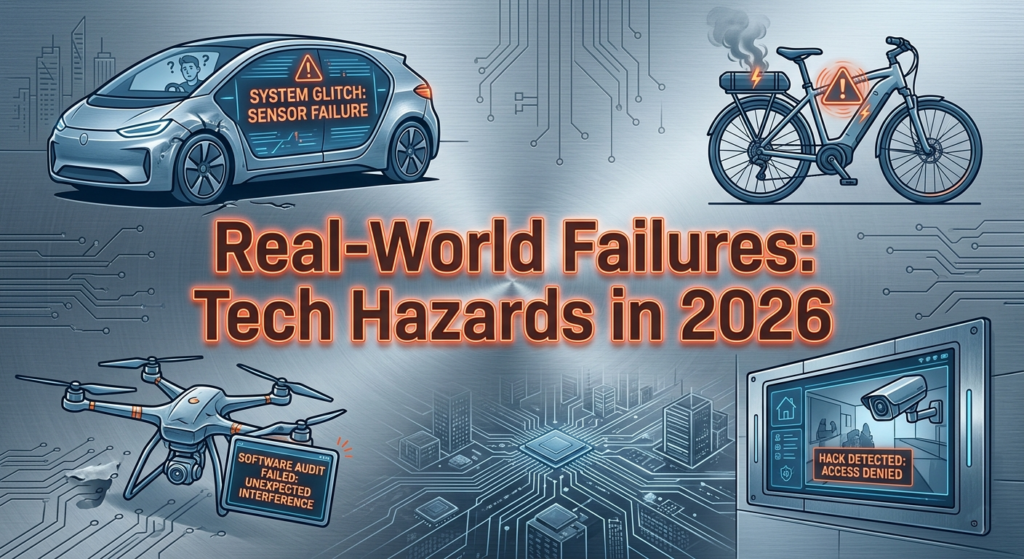
Real-World Failures: Tech Hazards in 2026
The legal landscape has evolved alongside technology. Some trends dominate recent litigation.
Lithium-Ion Fires
Electric mobility is mainstream. But lithium-ion batteries still carry a hidden danger: thermal runaway. E-bikes, laptops, even electric scooters can ignite violently.
Courts now hold manufacturers strictly liable when evidence shows that safer alternatives—like solid-state batteries—were ignored to cut costs. Fire suppression technology matters, yes. But ignoring design safety? That’s negligence.
Autonomous Vehicle Glitches
Level 3 and Level 4 autonomous systems are now common. The blame game has shifted. “Driver error” is no longer the default.
If a vehicle’s sensors fail to detect a pedestrian in low light, the liability may land squarely on the software engineers or hardware suppliers. Known sensor limitations? Ignored software warnings? That’s a legal smoking gun.
In 2026, courts increasingly treat these failures as foreseeable risks. Your role as a passenger or operator matters less than the manufacturer’s responsibility to design safe systems.
Preserving Evidence: The Legal Checklist
Product liability cases hinge on evidence. You cannot leave this to chance.
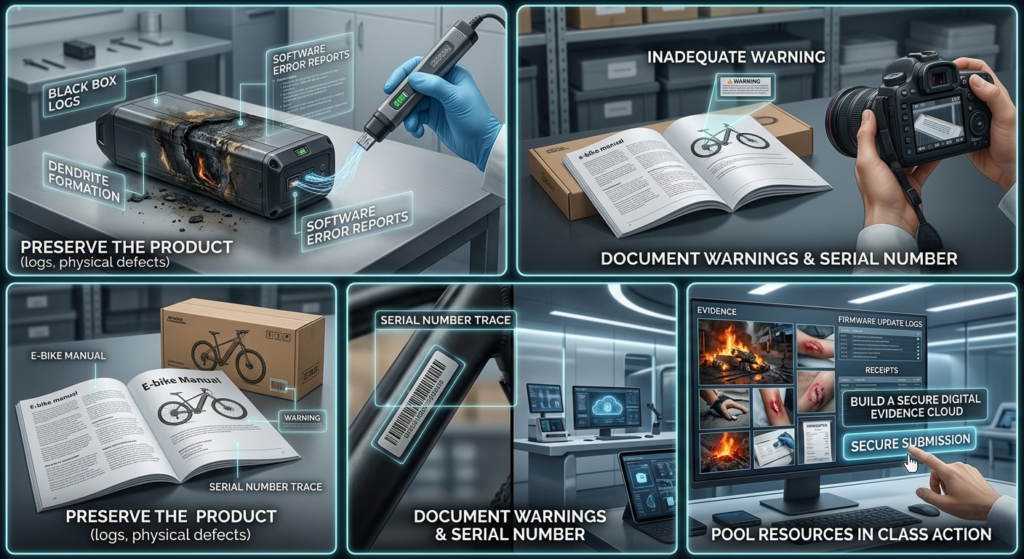
- Keep the product. Even charred or broken, the device contains clues: black box logs, dendrite formation in batteries, or software error reports.
- Save packaging and manuals. They reveal what warnings were provided—or omitted.
- Document everything. Receipts, repair logs, firmware updates. Screenshots count.
- Photograph the scene. High-resolution images of the device, surrounding damage, and injuries can become central evidence.
- Identify the serial number. This helps lawyers trace recalls, batch issues, or prior complaints.
Skipping any of these steps risks weakening your claim. In 2026, companies can and will use every loophole to avoid accountability.
Strength in Numbers: Class Actions
When a major tech company releases a faulty smartphone or home assistant, the harm rarely stops at one user. Hundreds—or thousands—may face the same defect. That’s when class actions become powerful.
Individual lawsuits are slow, expensive, and often dismissed. A class action pools resources, allowing plaintiffs to hire forensic engineers and software auditors who can dig into corporate practices. Internal memos, test results, ignored warnings—these often surface in collective litigation.
For the consumer, class actions offer a path to compensation without running a solo trial. They also level the playing field against billion-dollar corporations that have dedicated legal teams.
Taking Action Without Paying Upfront
The cost of investigating tech failures is high: forensic analysis, expert testimony, software audits. Most victims cannot afford this.
Good news: most elite product liability firms operate on contingency. You pay nothing unless the case succeeds. If the claim results in a settlement or jury award, the firm takes a percentage. Until then, the financial risk is theirs, not yours.
This model encourages lawyers to pursue cases aggressively and ensures victims aren’t shut out of justice because of cost.
Timing Is Everything
You might be tempted to wait, hoping the manufacturer will “fix it quietly.” Don’t.
Stock prices, public image, and insurance claims matter far more to corporations than your injury. Delaying can destroy critical evidence: broken devices are replaced, logs are erased, and witnesses forget details.
Act fast. Preserve the product, document the incident, and contact a lawyer. Your recovery depends on speed and thoroughness.
The Bottom Line: You Have Rights
High-tech failures in 2026 are not “accidents.” They’re preventable. Manufacturers have a duty to anticipate risks, warn consumers, and design products safely. When they fail, the law provides a path for recovery.
Don’t let corporate PR spin or complex technology intimidate you. Your injuries are real. Your rights are real. And there are legal experts ready to help you navigate this new landscape.
Contact a product liability lawyer experienced in high-tech litigation today. Get a Free Case Review. Secure your evidence. Protect your health. And ensure that the company responsible for your injury is held accountable.
In 2026, technology might be smarter than ever—but the law still protects the people it’s supposed to serve.