
Mental Health Apps for Anxiety in 2026: Which Platforms Actually Connect You With Licensed Therapists?
Anxiety used to be something people whispered about. Not anymore.
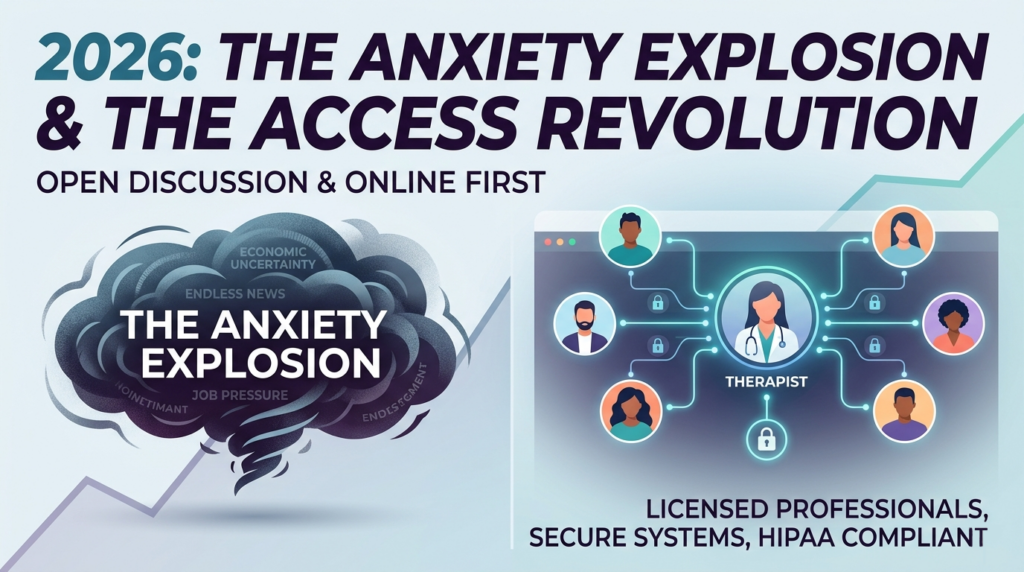
But here’s the interesting part. While anxiety rates climbed, access to treatment changed just as quickly. Traditional therapy—weekly appointments in a physical office—no longer dominates the landscape. A large share of people now look for online therapy for anxiety first.
And no, we’re not talking about chatbots pretending to be therapists.
Several platforms now connect users directly with licensed mental health professionals through secure, HIPAA-compliant systems. For someone searching “best online therapy for anxiety 2026,” the experience usually begins on an app and ends with a real therapist—often within a day or two.
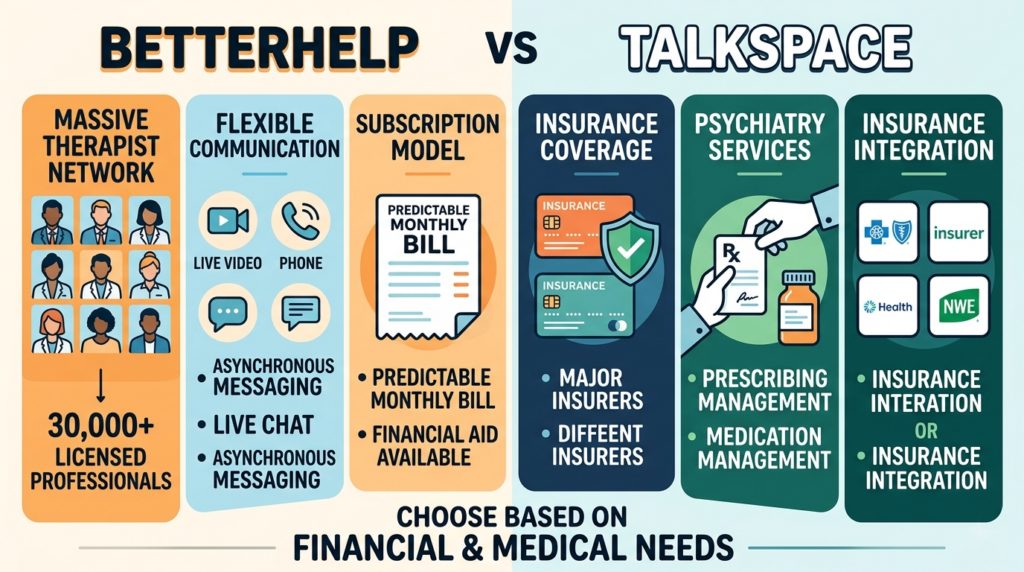
Two platforms dominate the conversation: BetterHelp and Talkspace.
Both offer remote therapy. Both employ licensed clinicians. But they operate very differently.
Let’s break it down.
BetterHelp: Massive Therapist Network and Flexible Communication
When people search for online therapy, they often land on BetterHelp first. There’s a simple reason for that—it’s the largest platform in the space.
The company works with more than 30,000 licensed professionals across the United States. That pool includes clinical social workers, licensed marriage and family therapists, professional counselors, and doctoral-level psychologists.
In practice, this size matters.
You answer a short intake questionnaire about your symptoms, preferences, and therapy goals. The platform’s matching system then pairs you with a therapist who specializes in the type of anxiety you’re dealing with—social anxiety, panic disorder, OCD patterns, trauma responses, and so on.
Is the match perfect every time? Not always. But switching therapists inside the system is surprisingly easy.
Messaging, Video, and the “Always Available” Effect
BetterHelp built its reputation on flexibility. Instead of forcing patients into a single communication style, the platform supports several options:
- Live video sessions
- Phone therapy sessions
- Live chat therapy
- Unlimited asynchronous messaging
That last feature deserves attention.
You can send messages to your therapist at any time. Midnight. Early morning. Whenever anxiety spikes. Therapists typically respond once or twice per day rather than instantly, but the process works almost like structured journaling.
For people dealing with racing thoughts or intrusive worries, that constant outlet can be surprisingly helpful.
What Does BetterHelp Cost Without Insurance?
Here’s the blunt truth: BetterHelp still runs mostly on a subscription model.
Typical pricing falls somewhere between $65 and $100 per week, billed monthly. Insurance coverage exists in limited regions, but many users pay out of pocket.
The company does offer financial aid, which can lower the weekly rate depending on income or life circumstances. Students, unemployed individuals, and military members often qualify for reduced pricing.
Even then, therapy isn’t cheap. But compared with traditional in-office sessions—where $200 per hour isn’t unusual—it can be a more manageable option.
Talkspace: The Platform Built Around Insurance Coverage
Now let’s talk about Talkspace.
If BetterHelp feels like a flexible consumer tech platform, Talkspace operates more like a digital healthcare provider. The company has invested heavily in insurance integration.
And that changes the economics.
Talkspace works directly with several major insurers, including Aetna, Cigna, Optum, Anthem, and Medicare.
For many patients, this reduces therapy costs to a typical $15–$30 copay.
That’s a massive difference compared with subscription-based platforms.
Employers also play a role here. Many corporate wellness programs now include Talkspace access through Employee Assistance Programs (EAPs). Some workers receive several sessions completely free before standard copays apply.
Psychiatry and Medication Management
Here’s another important distinction.
Talkspace doesn’t stop at talk therapy. The platform also offers psychiatry services.
Patients can schedule evaluations with licensed psychiatrists or psychiatric nurse practitioners. If medication is appropriate, providers can prescribe commonly used treatments for anxiety—SSRIs, SNRIs, and related medications—and send prescriptions directly to a local pharmacy.
The structure usually looks like this:
- Initial psychiatric evaluation: roughly $299
- Follow-up medication management sessions: about $175
Insurance frequently covers these services, which changes the cost calculation again.
BetterHelp, by contrast, focuses almost entirely on psychotherapy and does not provide prescription management.
Are Online Therapists Actually Licensed?
This question comes up constantly. And it should.
Sharing deeply personal experiences through a mobile app requires trust. Users need to know they’re speaking with legitimate clinicians—not anonymous contractors.
Both BetterHelp and Talkspace verify therapist credentials before allowing them onto the platform. The process generally includes:
- Identity verification
- Education verification
- Active license confirmation through state regulatory boards
Therapists must display their full name and professional license type inside their profile.
But here’s something many users overlook: you can verify the license yourself.
Every state maintains a public database of licensed mental health providers. If you want confirmation, simply search your therapist’s license number through your state’s regulatory agency—for example, the California Board of Behavioral Sciences or the Texas Behavioral Health Executive Council.
It takes two minutes. And it removes any doubt.
Choosing Between BetterHelp and Talkspace
At this point, the obvious question appears: which platform is actually better?
The answer depends less on features and more on your financial and medical situation.
| Situation | Best Platform | Reason |
| Insurance covers online therapy | Talkspace | Copays dramatically reduce cost |
| No insurance or high deductible | BetterHelp | Subscription pricing is predictable |
| Need medication for anxiety | Talkspace | Psychiatry services included |
| Highly flexible schedule needed | BetterHelp | Messaging and scheduling options |
| Tight budget or student income | BetterHelp | Financial aid programs available |
Notice something here. Neither platform “wins” across every category.
They solve different problems.
BetterHelp focuses on accessibility and therapist availability. Talkspace prioritizes healthcare system integration and insurance reimbursement.
Understanding that difference helps narrow the decision quickly.
The Real Barrier to Therapy Isn’t Technology
Despite all these innovations, the biggest hurdle isn’t the platform.
It’s starting.
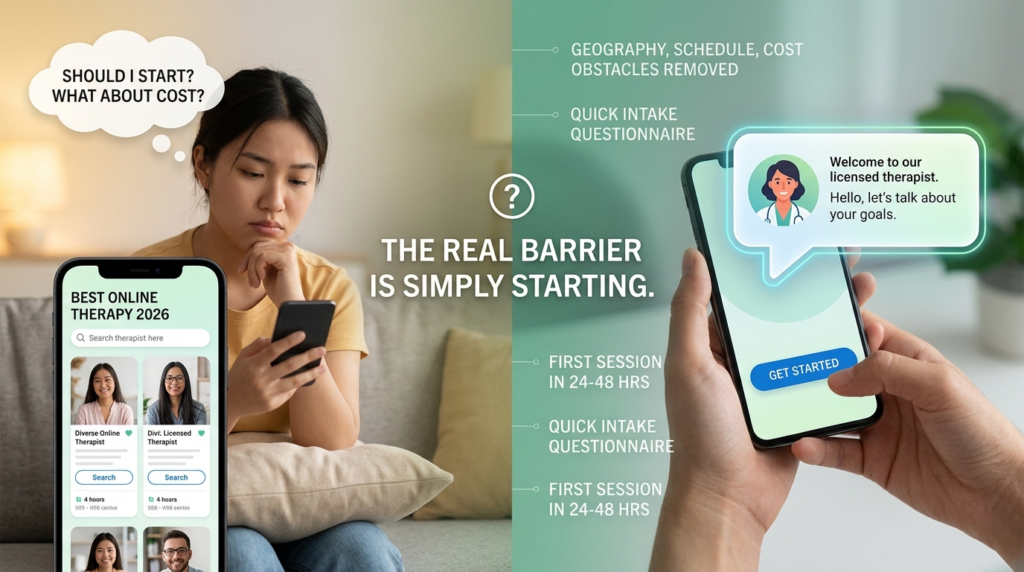
Many people sit on the idea of therapy for months, sometimes years. They read articles. Compare apps. Scroll through therapist profiles. Then close the browser and promise themselves they’ll deal with it later.
You probably know someone who’s done exactly that.
Online therapy platforms remove most of the traditional obstacles. Geography doesn’t matter anymore. Scheduling is flexible. Cost—while still imperfect—is often lower than private practice therapy.
The only step left is the first one.
Both BetterHelp and Talkspace offer quick intake questionnaires that take about five minutes. These aren’t marketing gimmicks; they function as clinical screening tools that help match users with therapists suited to their specific symptoms.
After that, the process moves fast. In many cases, the first therapy session happens within 24 to 48 hours.
And sometimes that’s all it takes—one conversation to break the cycle of constant anxiety.
Not a miracle cure. But a starting point.
A real one.