

Medical Malpractice: How to Prove “Standard of Care” Violations in 2026
When Bad Outcomes Become Legal Negligence
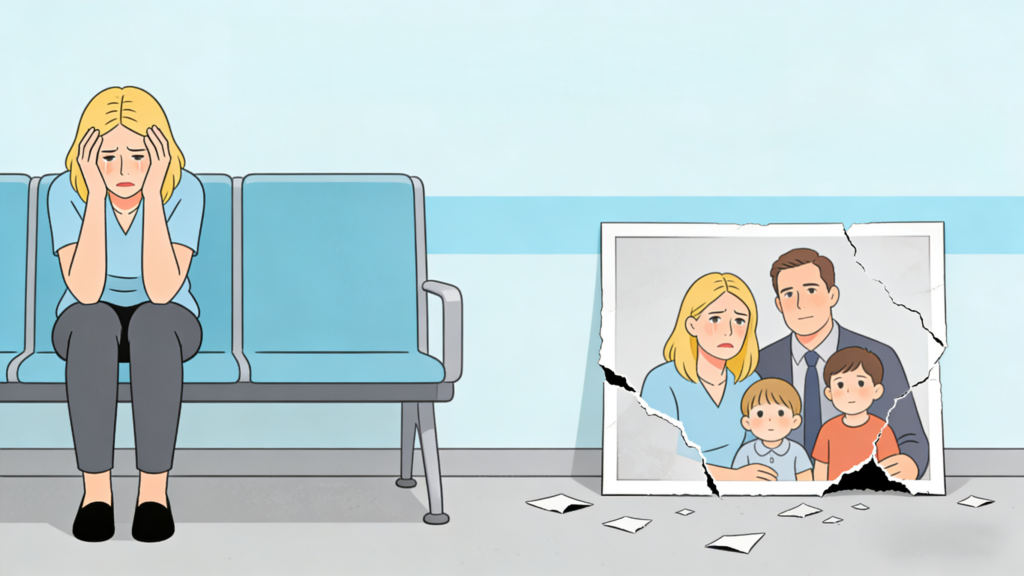
Families hit by sudden illness or tragic loss often feel betrayed. You walk into a hospital trusting professionals to protect your life. When that trust collapses because of an avoidable error, the impact is total. Grief alone won’t help you. You need to understand how the legal system defines responsibility. To hold a provider accountable, you must show their actions fall below the accepted professional threshold. Finding the right medical malpractice attorney in 2026 is often the first move toward uncovering whether your case meets the strict legal criteria for a lawsuit.
Understanding the “Standard of Care”
Think of the “Standard of Care” as an invisible ruler measuring every decision a doctor makes. It’s defined by what a competent healthcare professional, with a similar background in the same community, would reasonably do under the same circumstances.
Here’s the nuance: it’s not about perfection. A doctor can make a judgment call that turns out poorly without breaching this standard. In 2026, deviations are increasingly evaluated against AI-driven diagnostic tools and standardized treatment pathways. Ignore these protocols without valid medical reasoning, and you’ve crossed into negligence. Proving that breach? That’s your North Star in court. Without it, even catastrophic injuries may not qualify for legal claims.
The Four Pillars of a Medical Malpractice Case
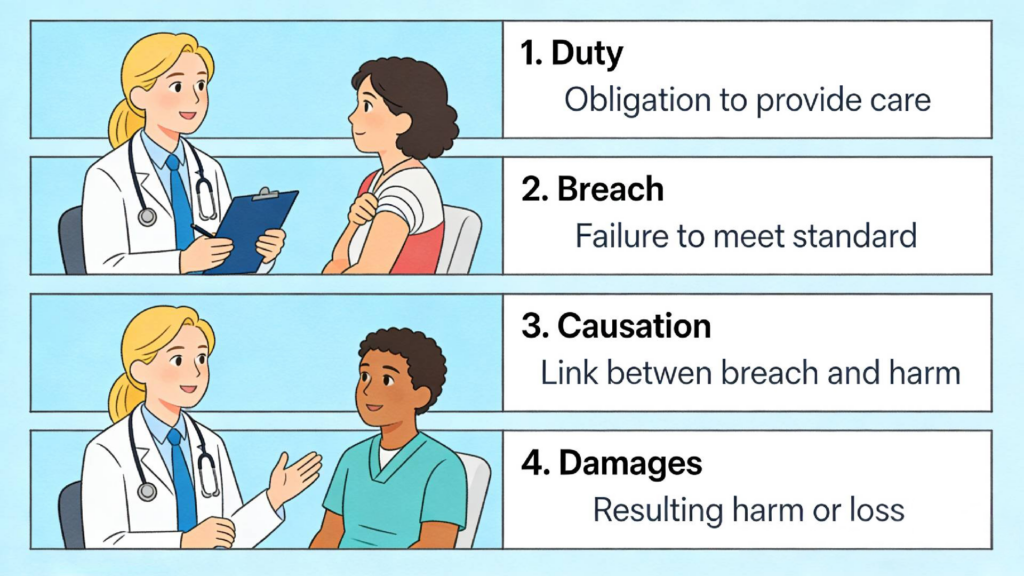
Winning a malpractice lawsuit relies on four critical elements. Miss one, and the case falls apart.
- Duty of Care You must prove a formal doctor-patient relationship exists. Once a physician agrees to treat you, they owe a legal duty to meet the standard of care.
- Breach of Duty This is the heart of the case. It happens when a provider fails to act as a reasonable peer.
Example: A surgeon completes a complex abdominal operation but skips the proper “sponge count,” leaving a gauze inside the patient. That’s a “Never Event”—a clear violation.
- Causation Showing the doctor made a mistake isn’t enough. You must link the error directly to the injury. Defense lawyers often point to pre-existing conditions as the real culprit. The key is “proximate cause,” connecting the act to the harm.
- Damages There must be measurable losses: medical bills, lost wages, pain, suffering, permanent disability—anything the law recognizes as compensable.
Hidden Traps: Diagnostic Errors
Misdiagnosis remains the leading driver of malpractice payouts in the U.S. Medicine is complicated, yes, but many tragedies could be avoided with proper differential diagnosis—a structured method for identifying diseases.
- Missing Cancer
With modern screenings in 2026, late-stage diagnoses of treatable cancers (lung, breast, colorectal) often result from ignored red flags or missed lab follow-ups. A free consultation with a misdiagnosis lawyer can help determine if delayed detection costs the patient a chance of survival.
- Stroke Misdiagnosis
Time is brain. When ER doctors dismiss neurological symptoms as migraine or vertigo, and the patient later suffers a massive stroke, failure to administer TPA or perform mechanical thrombectomy quickly is a common litigation trigger.
- Sepsis Delays
Sepsis kills fast. Many hospitals now have automated “Sepsis Alerts” in electronic health records. Missed vitals or ignored lactate spikes can lead to septic shock. In such cases, systemic negligence may be on the hospital’s shoulders.
The Role of Expert Testimony
You can’t navigate a malpractice trial alone. Almost every jurisdiction requires an expert witness. But here’s the difference: the right expert isn’t just a hired gun. They’re active, board-certified specialists in the same field as the defendant.
Their job is twofold:
- To the judge: prove the case has merit through affidavits or certification.
- To the jury: translate complex medical procedures into plain language, often with 3D renderings or digital timelines, so jurors can see exactly how a deviation from the standard of care caused harm.
Without expert testimony, the standard of care remains an abstract concept. With it, it becomes a visible, undeniable rule broken.
Statute of Limitations: Don’t Wait
One of the worst things I see is victims coming too late. Statutes of limitation are strict. Some states shorten the window; others extend it under the “Discovery Rule,” starting when you should have known about the injury.
In California and New York, the window might be just 1 to 2.5 years. Cases involving minors or surgical remnants follow different timelines. Waiting is dangerous: evidence disappears, memories fade, electronic records change. Every day counts.
Taking the First Step Toward Justice
If you or a loved one suffered due to medical negligence, the road ahead is both physical and legal. You don’t have to face it alone.
Step one: get your complete medical records. These documents are the DNA of your case—images, lab results, doctor notes.
Step two: find a committed advocate. Leading firms often work on contingency—no fee unless you win. A misdiagnosis lawyer can review your situation and determine if a standard of care violation occurred.
Hospitals have powerful insurance and defense teams. To level the field, you need a lawyer who combines aggressive litigation with real empathy. Don’t let medical negligence define your future. Take action, secure a free case review, and hold those responsible accountable.