

Cyber Liability Insurance: A Must-Have for Small Businesses in 2026
Ask any small business owner what keeps them up at night and you’ll hear the usual answers—cash flow, hiring, competition. Fair enough. But there’s another threat quietly climbing the list: cyber attacks.
The reality is simple. Most businesses now run on a stack of cloud apps, remote laptops, payment gateways, and SaaS platforms. That digital convenience comes with a trade-off. Every login, database, and customer record creates a potential entry point for attackers.
And attackers have changed.
In 2026, cybercrime isn’t just a lone hacker poking at weak passwords. Many attacks are automated and powered by AI. Phishing emails mimic internal company language. Fake invoices look legitimate. Some scams even use cloned voices of executives.
A single mistake—a rushed click on a fraudulent email, an exposed database, a compromised laptop—and suddenly customer data is gone or systems are locked by ransomware.
That’s exactly why Cyber Liability Insurance has moved from “nice to have” to essential protection for small businesses.
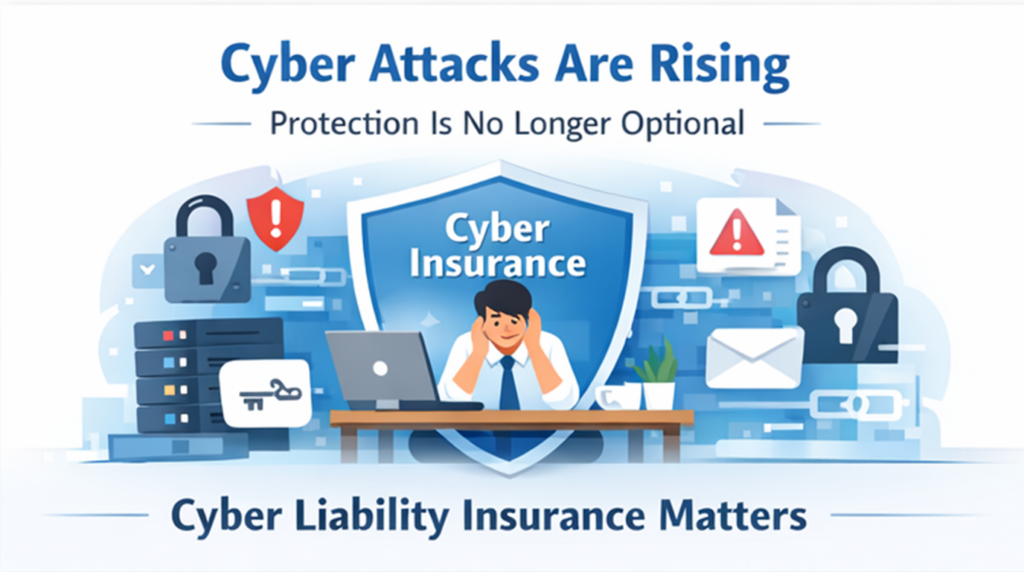
It doesn’t stop an attack. Nothing truly does. But it can prevent the financial damage from destroying your company.
What Cyber Liability Insurance Actually Covers
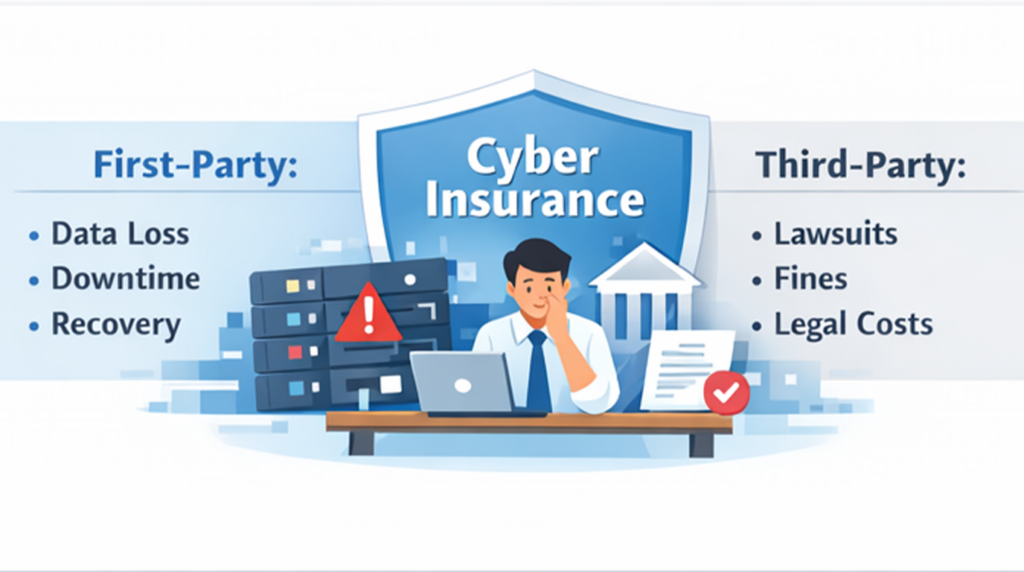
A modern cyber insurance policy usually splits protection into two areas. The difference matters.
One covers your direct losses. The other protects you when someone else blames you for theirs.
First-Party Coverage: Your Immediate Financial Damage
First-party coverage deals with the direct fallout of an attack. Think of it as emergency stabilization for your business operations.
Typical coverage includes:
Ransomware incidents. Many policies help cover negotiation services and system recovery after ransomware attacks. Interestingly, insurers in 2026 increasingly emphasize recovery rather than paying the ransom itself.
Data restoration costs. If databases are corrupted or destroyed, rebuilding them can cost tens of thousands of dollars. Insurance helps cover forensic specialists, system rebuilding, and data recovery.
Business interruption. If your systems go down for days—or even weeks—you’re still responsible for payroll, rent, and other fixed expenses. Cyber policies often reimburse lost revenue during downtime.
Customer notification requirements. Data breach laws frequently require businesses to notify affected customers and provide credit monitoring. That administrative process alone can become expensive quickly.
These costs pile up fast. Even relatively small breaches can generate six-figure recovery bills.
Third-Party Liability: When Customers or Partners Sue
The second part of cyber insurance addresses legal exposure.
If customers believe your company failed to protect their personal information, they can file claims. Regulators may also investigate.
Third-party coverage typically includes:
- Legal defense fees
- Regulatory penalties and fines
- Settlements or court judgments
Legal costs alone can overwhelm a small business. Cyber policies ensure you’re not facing those expenses alone.
2026 Reality: Insurers Now Require Real Security
Cyber insurers have learned a hard lesson over the last decade. Too many companies purchased policies without improving security.
That era is over.
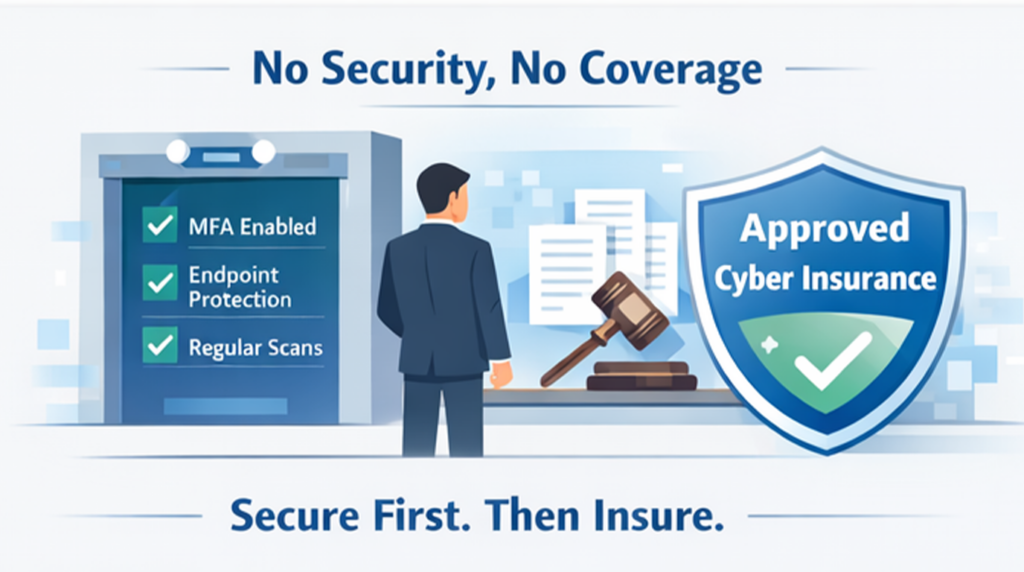
Most insurers now conduct security pre-qualification checks before issuing coverage. If your systems don’t meet basic security standards, the policy application may be rejected outright.
Three requirements appear almost everywhere:
Multi-Factor Authentication (MFA). Every major account must require MFA—email systems, payroll tools, cloud storage, admin dashboards. No exceptions.
Endpoint monitoring. Insurers increasingly demand Endpoint Detection and Response tools on company laptops and mobile devices.
Regular vulnerability scans. Businesses must demonstrate they patch software and run routine security scans.
Put bluntly: insurers expect you to lock the doors before they insure the building.
What Cyber Liability Insurance Costs in 2026
Premiums vary widely depending on industry risk, annual revenue, and how much sensitive data your company stores.
Some data is far more valuable on the black market than others. Medical records and financial data sit at the top of that list.
Here’s a rough snapshot of typical annual premiums in 2026.
| Industry | Average Annual Premium | Risk Level |
| Professional Services | $1,200 – $1,800 | Moderate |
| Retail and E-commerce | $2,500 – $4,200 | High |
| SaaS and Tech Startups | $3,000 – $5,500 | Very High |
| Healthcare Providers | $4,500 – $7,000 | Extreme |
These numbers surprise many founders at first. But compare them with the cost of recovering from a breach—often $100,000 or more—and the economics start to make sense quickly.
A Cost-Saving Trick Many Owners Miss
If your company already carries a Business Owner’s Policy (BOP), talk to your insurance broker about adding a cyber coverage rider.
Bundling cyber protection into a BOP sometimes lowers total premiums by 15–20%, especially for businesses generating less than $2 million annually.
Standalone policies still offer higher coverage limits, but smaller companies often start with bundled protection.
Payroll Systems: An Overlooked Cyber Risk
Here’s something many founders don’t expect: a large number of data breaches originate from payroll systems.
Not glamorous hacker attacks. Simple administrative vulnerabilities.
Payroll platforms store extremely sensitive information—Social Security numbers, bank account details, tax records. If those systems are poorly secured, attackers gain access to a treasure trove of personal data.
This is where platforms like Gusto and Deel enter the conversation.
Both services handle payroll processing and tax compliance, but they focus on different types of businesses.
Gusto vs Deel: Choosing the Right Payroll Platform
| Feature | Gusto | Deel |
| Core strength | U.S. payroll management | Global workforce support |
| Contractor payments | Simple 1099 filing | Supports contractors in 150+ countries |
| Base pricing | About $40/month + $6 per employee | About $49/month starting plan |
| Contractor pricing | ~$6 per contractor | ~$29 per contractor |
| Compliance focus | U.S. tax laws and ACA rules | International labor compliance |
Why does this matter for cyber risk?
Because outsourcing payroll shifts responsibility for sensitive employee data to specialized providers with strong security infrastructure.
Instead of storing Social Security numbers and banking details on your own systems, encrypted payroll platforms manage that information for you.
Less internal data. Less exposure.
Privacy Laws Are Tightening
Cyber risk isn’t just about hackers. Regulation now plays a huge role.
One major example is the California Privacy Rights Act, which expanded privacy protections for consumers.
Even businesses located outside California must comply if they serve customers in the state.
Key rules include:
Right to correct data. Customers can request corrections if personal information stored about them is inaccurate.
Restrictions on sensitive data. Consumers can limit how businesses use highly sensitive information such as location data or demographic identifiers.
Data minimization rules. Companies must justify why they collect and store personal data—and cannot keep it longer than necessary.
Failure to follow these rules doesn’t just trigger regulatory fines. Insurance providers may also deny claims if a company knowingly violates privacy laws.
That’s a scenario no founder wants to discover during a breach investigation.
A Practical Cybersecurity Checklist for Small Businesses
Cyber risk feels overwhelming until you break it down into practical steps.
Start with the fundamentals.
Get a cyber liability insurance quote. Coverage is often cheaper than expected and provides essential financial protection.
Enable multi-factor authentication everywhere. Email accounts, payroll systems, cloud storage, customer databases. Every login.
Move payroll and HR data into secure platforms. Tools like Gusto or Deel reduce the amount of sensitive data stored internally.
Review your privacy compliance. Regulations like CPRA continue expanding. Understanding them early avoids legal trouble later.
None of these steps guarantee perfect security.
But they dramatically reduce the chances that a cyber incident will cripple your business.
And that’s the real goal—building resilience before the attack happens.