
Best High-Yield Savings Accounts (HYSA) in 2026: How Savers Are Actually Beating Inflation
For a long time, many Americans treated savings accounts like a storage locker. Money went in, sat quietly, and—supposedly—stayed safe.
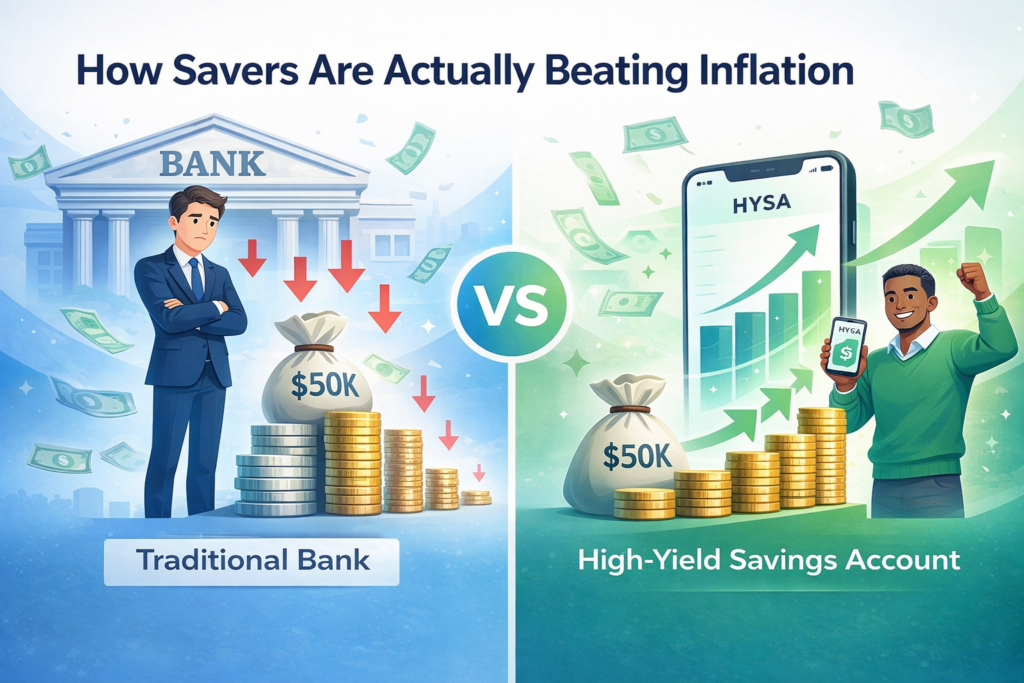
For years, the typical emergency fund lived inside one of the big traditional banks, earning a microscopic 0.01% or 0.02% APY. On paper that looks harmless. In reality, it quietly drains value. With core inflation hovering around 2.4% in 2026, that money loses purchasing power every single year.
Put differently: your balance might stay the same, but what it can buy steadily shrinks.
That’s why the conversation around high-yield savings accounts (HYSA) has shifted. This isn’t just about squeezing a little extra interest anymore. It’s about making sure your liquid cash isn’t falling behind the economy.
And the fastest way to fix that? Moving toward online banks offering the best savings rates.
The 2026 Interest Rate Gap: Traditional Banks vs. Online HYSAs
Even with the Federal Reserve easing pressure on interest rates, the difference between old-school banks and digital-first institutions is still enormous.
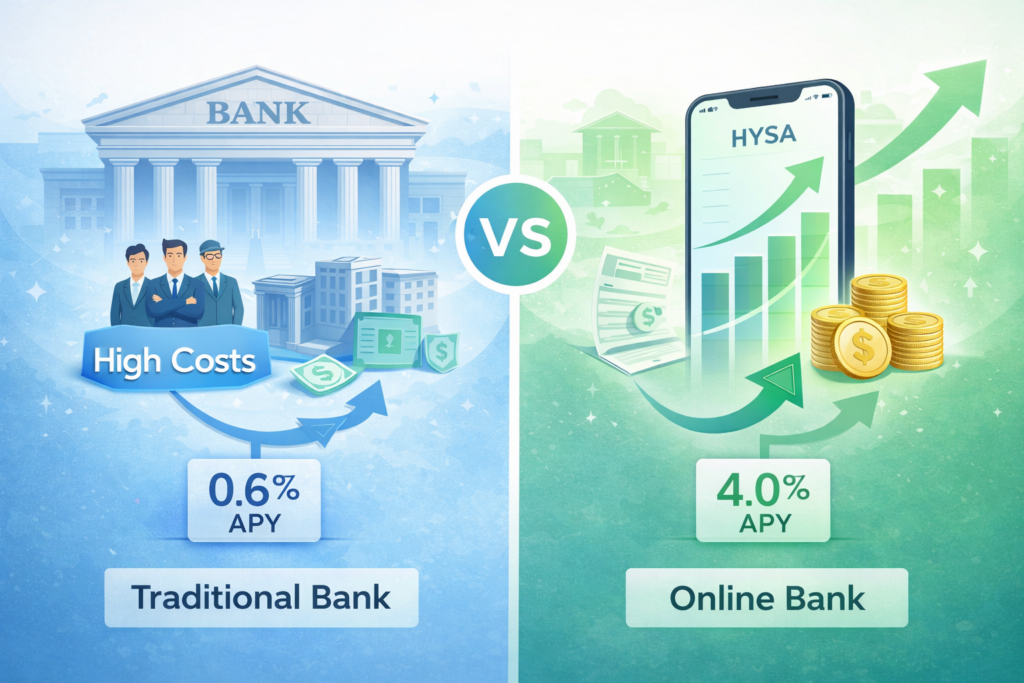
Right now, the national average savings rate in the U.S. sits around 0.61%.
Meanwhile, top high-yield savings accounts continue to offer 3.8% to 4.1% APY, sometimes even higher during promotional periods.
That gap matters more than people realize.
Take a typical emergency fund—say $50,000.
Leave it in a traditional bank and you might earn roughly $300 per year.
Put the same money into a 4.0% HYSA, and suddenly the annual interest jumps to $2,000.
That’s $1,700 difference. Same money. Same risk profile. Same accessibility.
The only variable is where the cash sits.
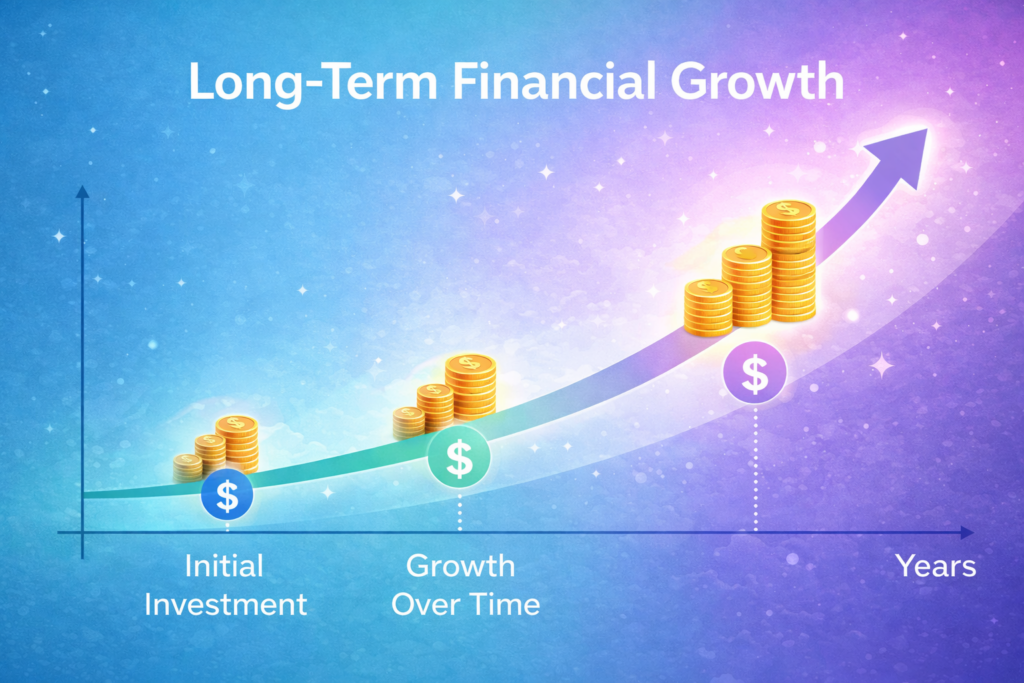
A lot of savers underestimate how much this compounds over time. But stretch that difference across several years, and you’re looking at thousands of dollars that would otherwise never appear.
Why Online Banks Keep Leading the HYSA Market
There’s nothing mysterious about why online banks dominate the best high-yield savings accounts lists.
Their advantage is structural.
Traditional banks operate thousands of branches. Buildings, staff, utilities, maintenance—the costs pile up quickly. Those overhead expenses eventually eat into the interest banks can offer depositors.
Digital banks operate differently. Many have no physical branches at all. Everything—from opening an account to depositing checks—happens through an app.
Lower costs give these institutions room to compete on one key thing: yield.
That’s why platforms like Openbank, SoFi, and Marcus by Goldman Sachs consistently appear among the top HYSA providers.
But interest rates aren’t the only incentive anymore.
Banks are getting aggressive about attracting deposits, and savers are benefiting.
Here’s what many accounts offer right now:
Sign-Up Bonuses Some banks offer $200 to $1,500 cash bonuses for new customers who deposit a qualifying amount.
Zero Monthly Fees Maintenance charges and overdraft penalties are disappearing fast. Many online banks have removed them entirely.
APY Boosts Certain platforms increase your interest rate if you set up direct deposit or recurring transfers.
Banks want your savings. And they’re willing to pay for it.
Are Online Savings Accounts Actually Safe?
This is usually the first concern people raise.
“If the bank only exists online, how do I know my money is safe?”
Fair question. But the answer is straightforward.
The real safety marker isn’t whether a bank has a physical branch. What matters is whether it’s insured by the Federal Deposit Insurance Corporation (FDIC).
If it is, your deposits receive federal protection.
As of 2026, FDIC coverage remains:
- $250,000 per depositor for individual accounts
- $500,000 for joint accounts
- Potentially higher coverage for certain trust structures
This means if an insured bank fails—rare, but not impossible—the federal government guarantees deposits up to those limits.
So when you open a savings account online, the first thing you should verify is simple: look for the FDIC membership.
No logo? Walk away.
Navigating a “Pause” in Interest Rates
Right now, savers are in a surprisingly favorable position.
The Federal Reserve has paused rate cuts, which means HYSA yields remain relatively strong. But there’s an important detail many people overlook: these accounts carry variable rates.
Unlike a Certificate of Deposit (CD), a HYSA’s APY can move up or down depending on broader market conditions.
If the Fed eventually cuts rates again, savings yields will likely follow.
So what should savers do today?
A few smart adjustments can make a noticeable difference.
- Chase Yield, Not Brand Loyalty
People often stay with the same bank for years out of habit.
That loyalty rarely pays.
If your current “high-yield” account has slipped below 3.5% APY, you’re probably leaving money on the table. Smaller digital banks are still offering rates around 4.2% as they fight for market share.
Checking alternatives once or twice a year is enough to keep your savings competitive.
Your bank won’t remind you to do this.
- Separate Short-Term and Medium-Term Cash
A well-structured savings strategy usually starts with a simple rule: protect liquidity first.
Keep three to six months of expenses inside a liquid high-yield savings account. That’s your emergency buffer.
Anything beyond that? Consider building a CD ladder.
By spreading deposits across CDs with different maturities—say 12, 18, and 24 months—you lock in today’s rates while still maintaining periodic access to your funds.
If interest rates fall later, those locked rates suddenly look very attractive.
- Use Digital “Buckets” to Organize Your Savings
One of the underrated advantages of online banking is the software.
Many apps now include vaults or bucket features that divide savings into categories without opening separate accounts.
Platforms like SoFi and Ally Bank make this especially easy.
You can create buckets for:
- Tax reserves
- Vacation funds
- Home down payment savings
- Emergency expenses
The money remains inside one high-yield account, earning the same APY. But psychologically, the structure helps people stay disciplined with their goals.
Small feature. Big behavioral impact.
Should You Move Your Savings Now?
Here’s the blunt answer.
If a large chunk of your cash still sits inside a traditional savings account paying near-zero interest, you’re essentially paying a convenience tax to that bank.
Years ago, physical branches mattered. Depositing checks required visiting a teller. Transfers took days. Opening new accounts involved paperwork.
Most of that friction has disappeared.
Mobile check deposits are standard. Transfers between banks happen quickly. And the process to open a savings account online usually takes less than ten minutes.
That’s it.
A short form, identity verification, and an initial deposit.
The result? Your idle cash suddenly starts producing meaningful interest.
The Real Takeaway
Interest rates may eventually drift downward again. That part of the cycle is inevitable.
But right now, savers still have a rare opportunity: high liquidity and relatively high yields at the same time.
The bigger risk isn’t the market.
It’s inertia.
Too many people keep their savings parked in the same account year after year simply because changing banks feels inconvenient. Meanwhile, thousands of dollars in potential interest quietly disappear.
A high-yield savings account won’t make you rich overnight. That’s not its job.
What it does do is simple—and powerful.
It ensures your cash is working just as hard as the rest of your financial plan.